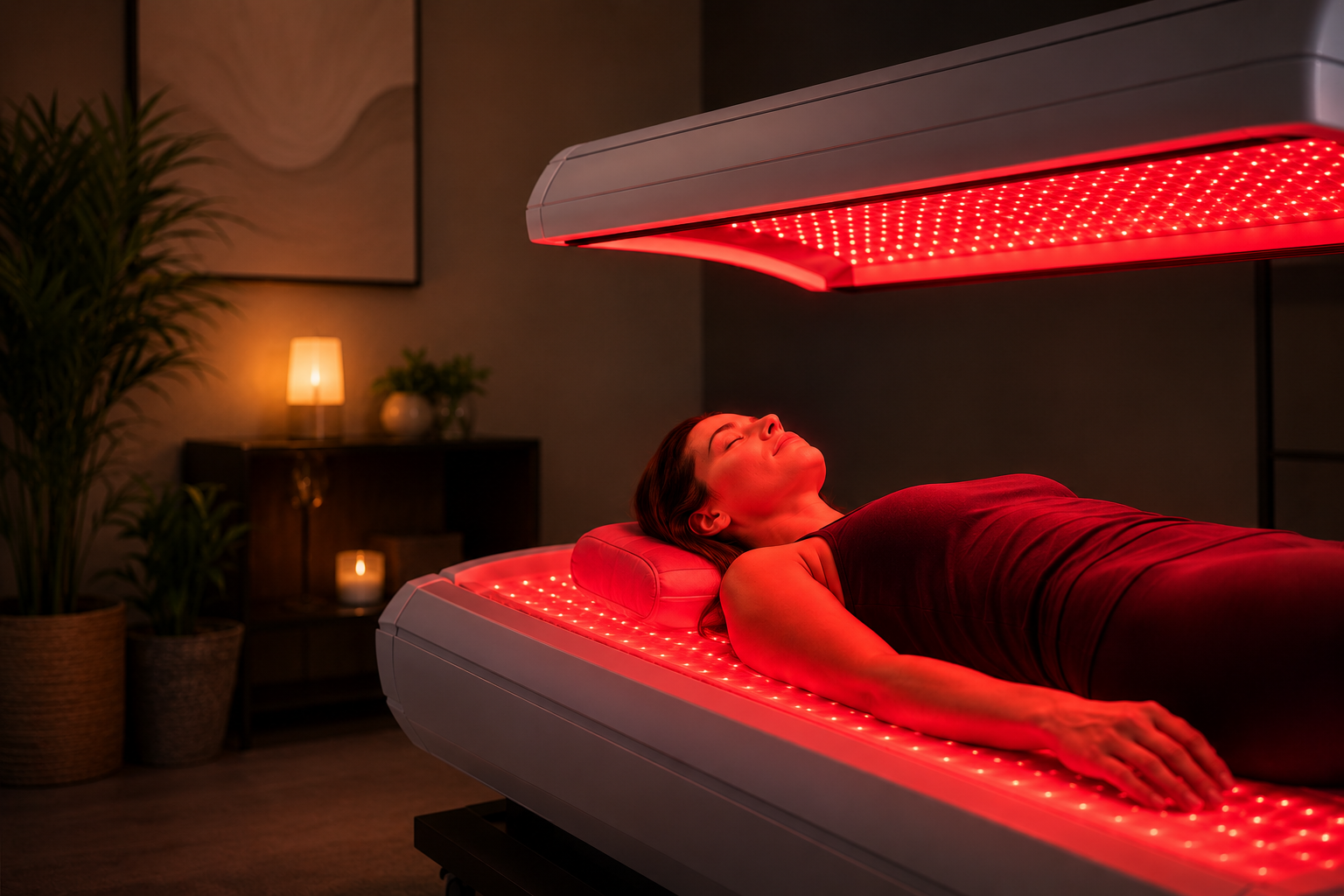
Your Brain Needs Light Too — The Surprising Connection Between Near Infrared Therapy and Mental Health
Anchored in: “Near-Infrared Stimulation in Psychiatry Disorders: A Systematic Review of Efficacy and Biological Mechanisms” — Medical University of Lodz, published PMC/NIH, 2025, and “Transcranial Near-Infrared Light in Treatment of Neurodegenerative Diseases” — Baylor Scott & White/Texas A&M, Frontiers in Pharmacology, 2022
When most people think about light therapy, they think about physical things — sore muscles, aging skin, joint pain. And those benefits are absolutely real and well documented. But there’s a dimension of near infrared light therapy that doesn’t get talked about nearly enough — and honestly, in the world we’re living in right now, it might be the most important one.
Near infrared light has a measurable, documented effect on the brain.
Not metaphorically. Not in a vague wellness sense. Literally — the light penetrates the skull, reaches the brain, and affects how your neurons function. The research on this is some of the most exciting in the entire field of photobiomodulation, and it has profound implications for mood, cognition, anxiety, depression, and long-term brain health.
The 2025 systematic review that stopped us in our tracks
A comprehensive systematic review published in March 2025 through PMC and the NIH — authored by researchers at the Medical University of Lodz and reviewing 23 pre-clinical and clinical studies — examined the effects of near infrared light therapy on psychiatric conditions including major depressive disorder, anxiety, dementia, Parkinson’s disease, and traumatic brain injury.
The findings were striking. Near infrared stimulation was described as an effective approach comparable to psychopharmacological treatment — meaning it performed comparably to medication — for several of the conditions studied. The primary mechanism identified was the stimulation of mitochondrial metabolism through absorption of near infrared energy by cytochrome c oxidase in brain cells. And critically, because the therapy doesn’t pass through the liver’s metabolic pathways, it doesn’t interact with other medications — making it exceptionally safe.
The review also highlighted that near infrared light may boost cerebral blood flow and cognitive function without adverse effects.
What’s happening in your brain
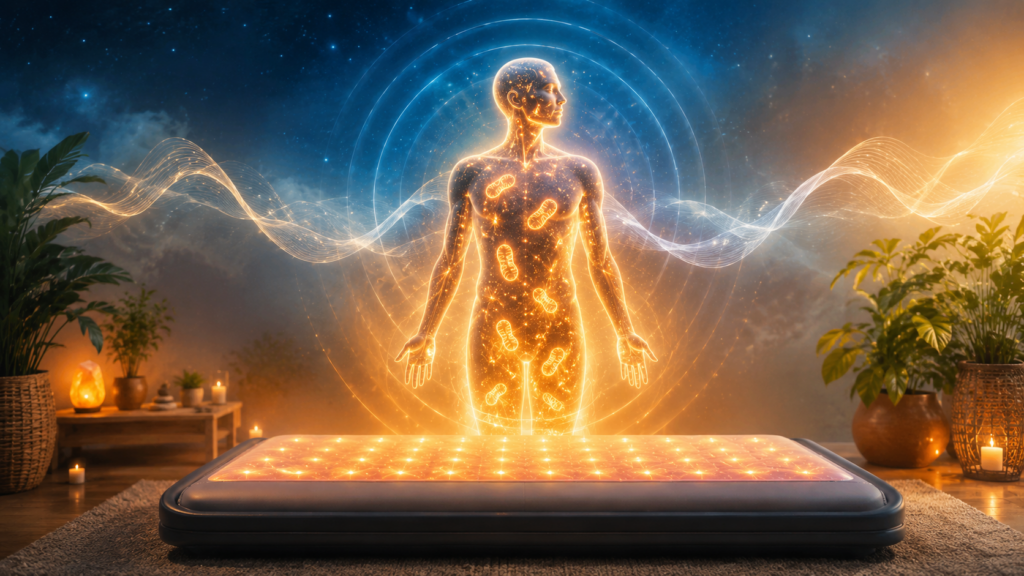
Your brain cells — neurons — have mitochondria just like every other cell in your body. When near infrared light penetrates the skull and reaches brain tissue, those mitochondria respond the same way muscle mitochondria do — by producing more ATP, reducing oxidative stress, and activating repair and protective pathways.
The 2022 review published in Frontiers in Pharmacology by researchers at Baylor Scott & White Health and Texas A&M added another fascinating layer: near infrared light appears to support the brain’s glymphatic system — the brain’s own waste clearance system, which flushes out cellular debris and inflammatory compounds during sleep. Supporting the glymphatic system has implications for cognitive clarity, memory, long-term brain health, and potentially even protection against neurodegenerative conditions.
In plain language: near infrared light helps your brain cells make more energy, clear out waste, reduce inflammation, and function better.
What this means for mood, anxiety, and daily wellbeing
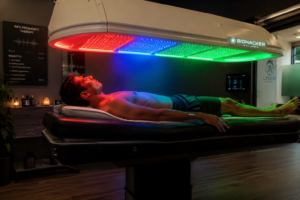
We are not making medical claims here. We’re not saying our SpectraLight beds treat depression or anxiety. What we are saying is that the published research on near infrared light’s effects on brain function and mood is real, it’s significant, and it’s growing.
What our clients tell us — consistently — is that regular sessions change how they feel mentally. Clearer. Calmer. More themselves. Less reactive to stress. Better able to handle the relentlessness of daily life. Some describe it as the mental fog lifting. Others say it’s the first time in a long time they’ve felt genuinely settled in their own nervous system.
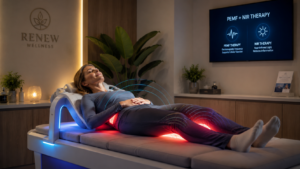
Is that all near infrared light? Our sessions combine four wavelengths of light with 10,000 Rife frequencies, so it’s the whole system working together. But the brain benefits of near infrared specifically are now well documented enough that we feel strongly every person should know about them.
Your brain is tired. It deserves support too.
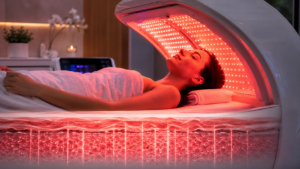
We live in a world that is extraordinarily demanding on our mental and neurological resources. Most of us are running our brains at high intensity with very little genuine recovery support. Near infrared light therapy — non-invasive, deeply relaxing, and backed by published science — is one of the most accessible ways to give your brain what it needs.
Come in and give your whole self a session. First 20 minutes are on us. 🤍
— April & Tiffany
Light Therapy San Diego
Book your complimentary session at lighttherapysandiego.com